
Your First Night Under the Wing
Fly in. Pitch your tent. Wake up somewhere worth the trip.
A beginner’s guide to camping with your airplane—from choosing an airport to packing up for the flight home. Start with a manageable overnight, familiar flying conditions and a place that welcomes campers. You don’t need a remote backcountry strip to make it an adventure.
By Taxi to Table · Sources reviewed November 6, 2026 · About 5 minutes
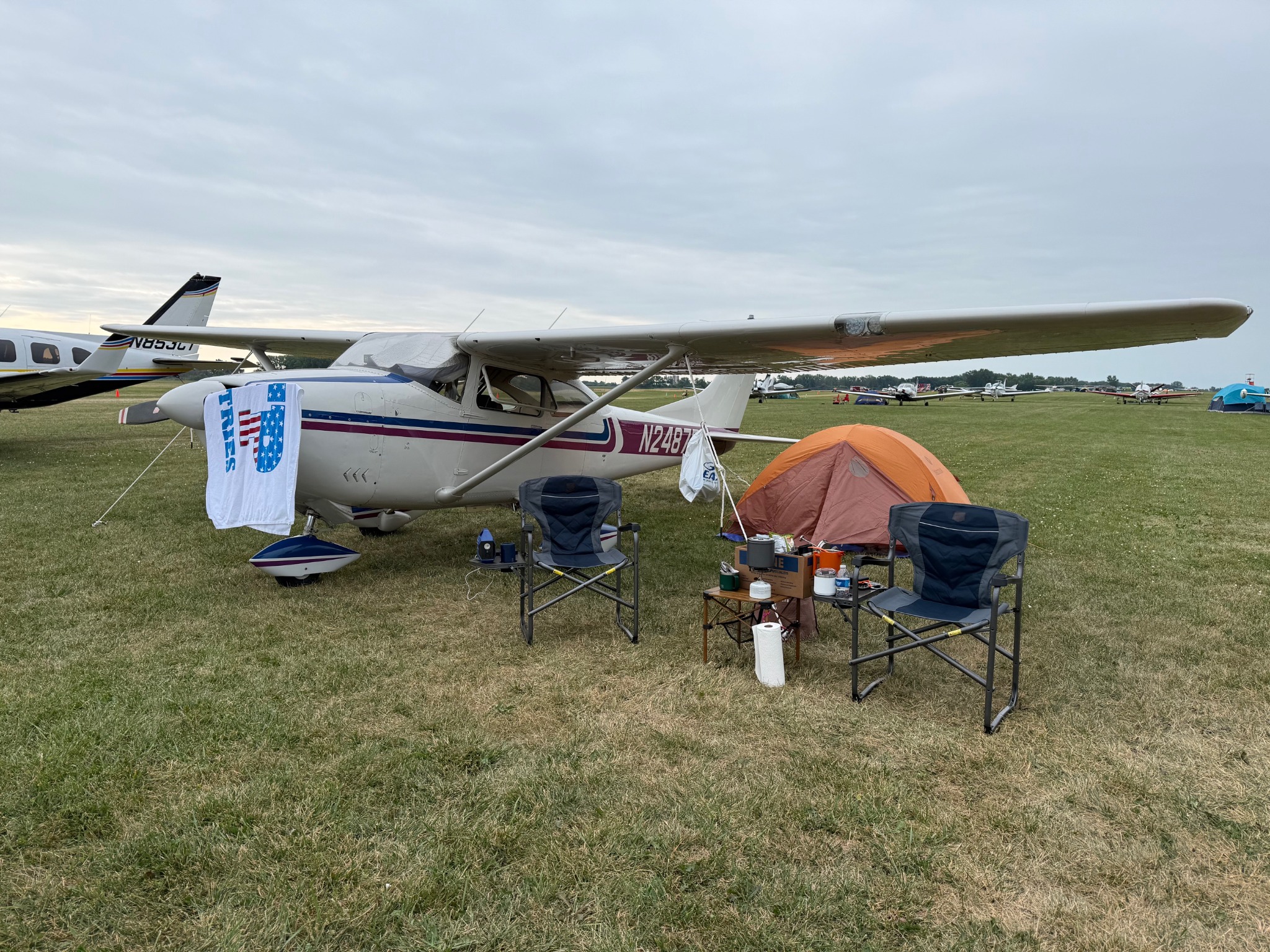
Can you camp at any airport?
No. Choose an airport that explicitly permits camping, then confirm permission for your dates. Overnight aircraft parking does not automatically allow a tent. On-airport camping, nearby campgrounds and event-only camping are different arrangements.
For a first trip, look for an airport suited to your experience and aircraft, with toilets, drinking water and a practical food option. A short flight and one night give you a chance to learn what works before tackling a more remote destination. AOPA’s airplane-camping introduction is a useful starting point.
Ask before you launch
- Is camping open on my dates, and do I need a reservation or prior permission?
- Where do I park and pitch the tent? Are camping and aircraft fees separate?
- Are drinking water, toilets and showers available, including after hours?
- How do I reach food or town and get back? Is a courtesy car time-limited?
- What are the rules for cooking, food storage, quiet hours and leaving early?
Save the answers and operator’s phone number offline. Have a backup hotel or another destination in mind if space, weather or facilities don’t work out.
Will your camping gear fit your airplane’s limits?
Weigh the packed bags, water, food and equipment. Use your aircraft’s current weight-and-balance data and flight manual to check loading, center of gravity, baggage-compartment limits and performance for the actual conditions. Check the return-flight loading too; fuel burn changes the picture. Secure baggage and keep exits and controls clear.
A bag fitting through the door does not establish that the load is acceptable. Keep required fuel reserves in the plan; reduce gear or change the trip when necessary. Review runway conditions, weather, density altitude and suitable alternatives. The FAA’s weight-and-balance discussion explains why both weight and distribution matter. This ground-trip guide supplements your planning; it does not replace aircraft procedures or current aviation information.
What should you bring?
Prioritize a weather-appropriate tent, rainfly, sleeping bag and insulating sleeping pad. Add layers, rainwear, a headlamp, medications, basic first aid, drinking water and simple food. Check overnight temperatures as carefully as daytime sunshine. Bring aircraft-appropriate tie-down equipment and chocks; confirm what the field supplies.
A compact chair is a welcome extra if the load allows. A large cooler, extra table and duplicate gear can wait until you know your setup. Try pitching the tent at home first and make sure everything packs back into the airplane.
Keep the first menu simple
Ready-to-eat food or a confirmed nearby restaurant avoids needing a stove. Do not assume permission to carry or use camping fuel: check applicable requirements and aircraft guidance before packing it, and local fire rules before using it. Never cook inside a tent. EAA’s aircraft-camping rules, for example, prohibit campfires at Wittman campsites and impose specific stove restrictions. Those are event rules, not blanket permission at other airports.
What happens after you land?
Follow the airport’s arrival and parking instructions, check in and settle fees before setting up where required. Secure the aircraft using its recommended procedures. Confirm the tent location with the operator and keep ropes, stakes and loose equipment clear of aircraft movement areas. Follow any special engine-start or departure rules.
Find the toilets, water point, permitted walking route and shelter before dark. Obtain any gate or facility code directly from the operator. Know who to call if conditions change. Expect fewer conveniences than a hotel: showers may be absent, phone service unreliable and food farther away than it looks on a map.
Keep food and waste stored as local rules require, respect neighboring campers and have a plan for deteriorating weather. A reservation or Passport stamp should never become a reason to press on.
How do you pack up for departure?
Recheck weather, NOTAMs, airport conditions and your fuel plan. Collect every stake, rope and piece of rubbish. Account for covers, chocks and tie-downs as part of your normal aircraft procedures, then complete a careful preflight and confirm the final load is secured. Leave the campsite ready for the next pilot.
Once you’re home, note what you used and what you missed. Your second trip will be easier to pack for. Record your visit in Passport and share useful, dated observations about the facilities.
Airplane camping packing checklist
Adapt this starter list to your aircraft, destination and forecast. Tick items as you prepare; ticks are temporary and are not saved to your account.
Before you fly
Sleep & comfort
Food & aircraft
Taxi to Table · taxitotable.com/airplane-camping-guide.html · Reviewed November 6, 2026. Confirm current conditions and local rules.
Find your first night under the wing.
Browse published camping options, read the arrival details and confirm arrangements with the operator. After a qualifying on-airport overnight, record your visit to work toward your Under the Wing stamp.
Find camping airports → See Passport rules →Sources & review
Prepared by Taxi to Table using the linked AOPA, FAA and EAA references, reviewed November 6, 2026. Packing and itinerary suggestions are editorial recommendations. Event rules and airport facilities can change; confirm them directly for your trip.